
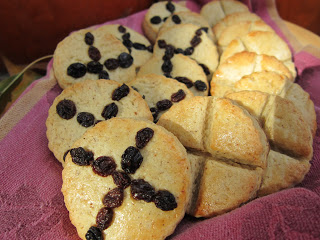
I suppose, in some ways, I had a somewhat deprived childhood. Oh, nothing serious, but when I grew up in the northern English town of Halifax, nothing really happened on Hallowe’en. There was no Trick or Treating and no kids ran the gauntlet of their mother’s anger by tearing holes in her best white sheets to make ghost costumes. There were precious few Jack O’Lanterns. In fact, I don’t recall seeing many pumpkins around anyway. I do have a vague recollection of bobbing for apples round at a friend’s house, but that’s about as Hallowe’en as it got. So I found it interesting to learn recently that the tradition of Trick or Treating is alleged to have started in Britain, where special cakes – known as soul cakes – were baked and distributed door to door by children on Hallowe’en. I certainly never saw a soul cake as a child in Halifax. In fact, I’ve still never seen one!
In parts of Britain though, there has been a long tradition of Mischief Night. Hardly an event to be encouraged, as the mischief has been known to include taking people’s doors off their hinges, Super Glueing fuel caps on cars (that happened to me one year, in Hull), pushing firecrackers through people’s front door mail boxes – pretty terrifying if you happen to be on the receiving end, and all manner of misdemeanor. But now, here in the UK, we’ve imported Hallowe’en lock, stock and cauldron from the USA. On October 31st, doorbells ring, and children compete with each other to outdo Boris Karloff’s finest monster. Some transform into Buffy wannabees, while others, dressed as Zombies, lurch drunkenly from house to house. Inevitably, there’s some little girl who didn’t quite get the point (or maybe it was her misguided mother’s fault) and appears as a vision in pink tulle, waving a wand with a slightly skewed star stuck on the end. This is what happens when you don’t have a whole lot of indigenous Hallowe’en tradition. It’s like the USA version, but not quite…

 Can the living help the dead…and at what cost?
When Alex Fletcher finds a painting of a drowned girl, she’s unnerved. When the girl in the painting opens her eyes, she is terrified. And when the girl appears to her as an apparition and begs her for help, Alex can’t refuse.
But as she digs further into Grace’s past, she is embroiled in supernatural forces she cannot control, and a timeslip back to 1912 brings her face to face with the man who killed Grace and the demonic spirit of his long-dead mother. With such nightmarish forces stacked against her, Alex’s options are few. Somehow she must save Grace, but to do so, she must pay an unimaginable price.
Samhain Publishing
Amazon
This is what readers and reviewers are saying about Saving Grace Devine:
“If you love Gothic literature, Cat’s the new author on the prowl… – Erin Al-Mehairi at Oh, For The Hook of a Book
“Prepare to be terrified! Prepare to be captivated!” – Mallory Anne-Marie Forbes at Mallory Heart Reviews
“If you like taunting yourself with fear of what is coming up behind you, this book is perfect for you. Five stars.” Author, Uvi Poznansky
My footsteps echoed as I trod the creaky polished floorboards in the empty room. I couldn’t overcome the feeling of being watched. For the second time since I had arrived on Arnsay, goosebumps rose along my arms and the little hairs on the back of my neck stood up. Don’t be ridiculous, I told myself, your imagination’s got the better of you again.
I shook my head and made for the nearest glass cabinet. Above it, a portrait of the museum’s benefactor—Jonas Devine—gazed out at the world. I studied his face for a minute. His dark hair, flecked with gray, receded at the temples. He had a kind expression, clear brown eyes and a neatly trimmed moustache in the style of the late Victorians. My attention returned to his eyes. The artist had captured an ethereal, faraway look in them as if his subject could see something beyond what had been in the room. He was dressed in a dark suit of the period and one hand rested on his thigh, while the other held a book. I peered closer but couldn’t see any title. Maybe it was a small Bible or perhaps a novel by his favorite writer.
I switched my gaze down to the contents of the cabinet. A pair of wire-rimmed spectacles, gloves, a pen and inkstand, all personal items from the man’s study. I moved on and came across an information board nailed to the wall. It seemed Jonas Devine had bought the house when he brought his new bride Margarita—a former music hall artist—to settle on this remote island. This had followed some unspecified need of hers to leave Edinburgh, where she worked, and where she first met Jonas. A photograph showed a dark-eyed woman dressed in Spanish style, complete with mantilla and fan. I could imagine her dancing Flamenco, flashing brown legs as she laughed and flirted with every man she saw.
Another photo showed a slightly older Margarita with a little boy of around two—her son, Adrian. Her eyes no longer flashed and the Latin flamboyance had given way to a demure dress, well suited to a young Victorian mother. But I read defiance in her expression. I bet she could be a handful, I thought.
I read on. Margarita had died soon after giving birth to her second son, Robert, leaving Jonas with two young boys. In 1897, he had acquired a governess—Agnes Morrison—a widow with a young daughter. They were married soon after. There was one photograph of her, with Jonas’s two sons, but no sign of her daughter. I did learn one thing about her though. Her name was Grace and she took Jonas’s surname on her mother’s marriage. Grace Devine.
An icy breeze chilled me, and I hugged myself. I had the strongest feeling of someone standing right by my shoulder, but I had heard no one come up the stairs. I braced myself, took a deep breath and whirled around, relieved to see I was still alone. But then another sound drifted towards me. A sigh. Again I told myself to stop imagining things and carried on wandering around the rooms.
Jonas Devine had certainly been an avid collector. Stamps, coins, butterflies, all cataloged in meticulous detail and laid out for inspection. I supposed there wasn’t much else to do if you were independently wealthy and lived on a remote Scottish island in the late nineteenth century.
One room was devoted to his c
Can the living help the dead…and at what cost?
When Alex Fletcher finds a painting of a drowned girl, she’s unnerved. When the girl in the painting opens her eyes, she is terrified. And when the girl appears to her as an apparition and begs her for help, Alex can’t refuse.
But as she digs further into Grace’s past, she is embroiled in supernatural forces she cannot control, and a timeslip back to 1912 brings her face to face with the man who killed Grace and the demonic spirit of his long-dead mother. With such nightmarish forces stacked against her, Alex’s options are few. Somehow she must save Grace, but to do so, she must pay an unimaginable price.
Samhain Publishing
Amazon
This is what readers and reviewers are saying about Saving Grace Devine:
“If you love Gothic literature, Cat’s the new author on the prowl… – Erin Al-Mehairi at Oh, For The Hook of a Book
“Prepare to be terrified! Prepare to be captivated!” – Mallory Anne-Marie Forbes at Mallory Heart Reviews
“If you like taunting yourself with fear of what is coming up behind you, this book is perfect for you. Five stars.” Author, Uvi Poznansky
My footsteps echoed as I trod the creaky polished floorboards in the empty room. I couldn’t overcome the feeling of being watched. For the second time since I had arrived on Arnsay, goosebumps rose along my arms and the little hairs on the back of my neck stood up. Don’t be ridiculous, I told myself, your imagination’s got the better of you again.
I shook my head and made for the nearest glass cabinet. Above it, a portrait of the museum’s benefactor—Jonas Devine—gazed out at the world. I studied his face for a minute. His dark hair, flecked with gray, receded at the temples. He had a kind expression, clear brown eyes and a neatly trimmed moustache in the style of the late Victorians. My attention returned to his eyes. The artist had captured an ethereal, faraway look in them as if his subject could see something beyond what had been in the room. He was dressed in a dark suit of the period and one hand rested on his thigh, while the other held a book. I peered closer but couldn’t see any title. Maybe it was a small Bible or perhaps a novel by his favorite writer.
I switched my gaze down to the contents of the cabinet. A pair of wire-rimmed spectacles, gloves, a pen and inkstand, all personal items from the man’s study. I moved on and came across an information board nailed to the wall. It seemed Jonas Devine had bought the house when he brought his new bride Margarita—a former music hall artist—to settle on this remote island. This had followed some unspecified need of hers to leave Edinburgh, where she worked, and where she first met Jonas. A photograph showed a dark-eyed woman dressed in Spanish style, complete with mantilla and fan. I could imagine her dancing Flamenco, flashing brown legs as she laughed and flirted with every man she saw.
Another photo showed a slightly older Margarita with a little boy of around two—her son, Adrian. Her eyes no longer flashed and the Latin flamboyance had given way to a demure dress, well suited to a young Victorian mother. But I read defiance in her expression. I bet she could be a handful, I thought.
I read on. Margarita had died soon after giving birth to her second son, Robert, leaving Jonas with two young boys. In 1897, he had acquired a governess—Agnes Morrison—a widow with a young daughter. They were married soon after. There was one photograph of her, with Jonas’s two sons, but no sign of her daughter. I did learn one thing about her though. Her name was Grace and she took Jonas’s surname on her mother’s marriage. Grace Devine.
An icy breeze chilled me, and I hugged myself. I had the strongest feeling of someone standing right by my shoulder, but I had heard no one come up the stairs. I braced myself, took a deep breath and whirled around, relieved to see I was still alone. But then another sound drifted towards me. A sigh. Again I told myself to stop imagining things and carried on wandering around the rooms.
Jonas Devine had certainly been an avid collector. Stamps, coins, butterflies, all cataloged in meticulous detail and laid out for inspection. I supposed there wasn’t much else to do if you were independently wealthy and lived on a remote Scottish island in the late nineteenth century.
One room was devoted to his c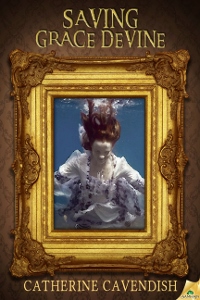 ollection of stuffed birds and animals, all presented in glass cases, in an approximation of their real habitat. Goodness alone knew where he had displayed all these things when he was alive. I found them hideous and macabre, but then I’ve never been a fan of taxidermy.
Below each case was a chest of shallow drawers. I opened one and found a collection of cameos. Much more my taste, and he had some lovely ones too. Some were carved onto coral, others onto tortoiseshell, some on ebony and some ivory. Some were the traditional profile, but most were far more intricate, and I pulled out drawer after drawer of them, all laid out under glass. The collection must have numbered hundreds, maybe thousands, and as for their value…
In the second chest, one drawer stuck halfway and wouldn’t budge, and I could tell something was wedged inside.
I reached in and poked around until I found the culprit. A material that felt like canvas was firmly stuck there. I pushed at it but it wouldn’t shift, so I wiggled it around and tried to grab hold of it. Eventually it gave and I pulled out something that looked like a rolled up painting.
I unrolled it and revealed a strange picture. The bizarre subject was painted in blue-green hues, and represented either a lake or the sea, from underwater. In the foreground a girl floated. Her eyes were closed and I guessed she was around fourteen or fifteen years old. She was dressed in a white gown, decorated with a pattern of tiny flowers. Her feet were shod in black Victorian, buttoned-up boots and the gown billowed up from her ankles, exposing white stockings. Her hands floated next to her and her light brown hair flowed loose around her. With a pang, I realized the artist hadn’t depicted a living subject. This girl had drowned.
It could almost have been a photograph, and I had the strongest urge to touch the girl and stroke her hair, but my fingers found the unmistakable texture of oil paint.
The goosebumps arose for the third time but I ignored them, riveted by the loving attention to detail in the artist’s tragic subject. Who would paint such a picture? I searched around for a signature but couldn’t find one.
I don’t know how long I stared. The painting troubled, repelled and fascinated me all in one go. Finally, I decided to take it down to Duncan. He could find a more suitable home for it. Then, as I started to roll it up, the girl’s eyes opened.
Copyright © 2014 Catherine Cavendish All rights reserved — a Samhain Publishing, Ltd. publicationhttps://horror.org/wp-content/uploads/2014/10/HH2104_FeaturedImage.jpg|https://staging.horror.org/wp-content/uploads/2026/09/Cavendish_image_1.jpg|https://staging.horror.org/wp-content/uploads/2026/09/Cavendish_image_2.jpg|https://staging.horror.org/wp-content/uploads/2026/09/Cavendish_image_3.jpg|https://horror.org/wp-content/uploads/2014/09/Cavendish_image_4.jpg|https://staging.horror.org/wp-content/uploads/2026/09/Cavendish_bio.jpg|https://staging.horror.org/wp-content/uploads/2026/09/Cavendish_cvr_SavingGraceDevine.jpg|https://horror.org/wp-content/uploads/2014/09/Cavendish_featured1.jpg|https://horror.org/wp-content/uploads/2014/10/HH2104_FeaturedImage.pngHH2104_FeaturedImage.jpg|Cavendish_image_1.jpg|Cavendish_image_2.jpg|Cavendish_image_3.jpg|Cavendish_image_4.jpg|Cavendish_bio.jpg|Cavendish_cvr_SavingGraceDevine.jpg|Cavendish_featured1.jpg|HH2104_FeaturedImage.png
ollection of stuffed birds and animals, all presented in glass cases, in an approximation of their real habitat. Goodness alone knew where he had displayed all these things when he was alive. I found them hideous and macabre, but then I’ve never been a fan of taxidermy.
Below each case was a chest of shallow drawers. I opened one and found a collection of cameos. Much more my taste, and he had some lovely ones too. Some were carved onto coral, others onto tortoiseshell, some on ebony and some ivory. Some were the traditional profile, but most were far more intricate, and I pulled out drawer after drawer of them, all laid out under glass. The collection must have numbered hundreds, maybe thousands, and as for their value…
In the second chest, one drawer stuck halfway and wouldn’t budge, and I could tell something was wedged inside.
I reached in and poked around until I found the culprit. A material that felt like canvas was firmly stuck there. I pushed at it but it wouldn’t shift, so I wiggled it around and tried to grab hold of it. Eventually it gave and I pulled out something that looked like a rolled up painting.
I unrolled it and revealed a strange picture. The bizarre subject was painted in blue-green hues, and represented either a lake or the sea, from underwater. In the foreground a girl floated. Her eyes were closed and I guessed she was around fourteen or fifteen years old. She was dressed in a white gown, decorated with a pattern of tiny flowers. Her feet were shod in black Victorian, buttoned-up boots and the gown billowed up from her ankles, exposing white stockings. Her hands floated next to her and her light brown hair flowed loose around her. With a pang, I realized the artist hadn’t depicted a living subject. This girl had drowned.
It could almost have been a photograph, and I had the strongest urge to touch the girl and stroke her hair, but my fingers found the unmistakable texture of oil paint.
The goosebumps arose for the third time but I ignored them, riveted by the loving attention to detail in the artist’s tragic subject. Who would paint such a picture? I searched around for a signature but couldn’t find one.
I don’t know how long I stared. The painting troubled, repelled and fascinated me all in one go. Finally, I decided to take it down to Duncan. He could find a more suitable home for it. Then, as I started to roll it up, the girl’s eyes opened.
Copyright © 2014 Catherine Cavendish All rights reserved — a Samhain Publishing, Ltd. publicationhttps://horror.org/wp-content/uploads/2014/10/HH2104_FeaturedImage.jpg|https://staging.horror.org/wp-content/uploads/2026/09/Cavendish_image_1.jpg|https://staging.horror.org/wp-content/uploads/2026/09/Cavendish_image_2.jpg|https://staging.horror.org/wp-content/uploads/2026/09/Cavendish_image_3.jpg|https://horror.org/wp-content/uploads/2014/09/Cavendish_image_4.jpg|https://staging.horror.org/wp-content/uploads/2026/09/Cavendish_bio.jpg|https://staging.horror.org/wp-content/uploads/2026/09/Cavendish_cvr_SavingGraceDevine.jpg|https://horror.org/wp-content/uploads/2014/09/Cavendish_featured1.jpg|https://horror.org/wp-content/uploads/2014/10/HH2104_FeaturedImage.pngHH2104_FeaturedImage.jpg|Cavendish_image_1.jpg|Cavendish_image_2.jpg|Cavendish_image_3.jpg|Cavendish_image_4.jpg|Cavendish_bio.jpg|Cavendish_cvr_SavingGraceDevine.jpg|Cavendish_featured1.jpg|HH2104_FeaturedImage.png