
☢
On May 10, the 2013 Bram Stoker Award for Superior Achievement in a Poetry Collection will be given to one of the following five nominated works. Since April is National Poetry Month and the Horror Writers Association is celebrating with our inaugural Horror Poetry Showcase, I wanted to celebrate the five nominated collections as well, to provide a glimpse into the brilliant world of “horror poetry.”
Superior Achievement in a Poetry Collection
- Bruce Boston—Dark Roads: Selected Long Poems 1971-2012 (Dark Renaissance Books)
- Helen Marshall—The Sex Lives of Monsters (Kelp Queen Press)
- Marge Simon and Sandy DeLuca—Dangerous Dreams (Elektrik Milk Bath Press)
- Marge Simon, Rain Graves, Charlee Jacob, and Linda Addison – Four Elements (Bad Moon Books/Evil Jester Press)
- Stephanie M. Wytovich—Hysteria: A Collection of Madness (Raw Dog Screaming Press)
I briefly considered selecting my favorite poem from each piece but decided, instead, to ask each poet (or poets, as the case may be) for their own favorite from each collection. In no particular order, here are their choices.
From the collection Dark Roads: Selected Long Poems 1971-2012, Bruce Boston selected “Dark Rains Here and There.”
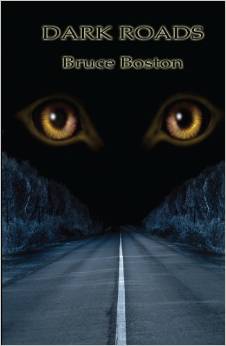
Dark Rains Here and There 2010
i
When she was a girl in Myanmar the dark rains fell suddenly in great sheets of water and sound in the heated afternoons.
Thunder would rattle the tin roof and the kitchen would often flood.
When the dark rains fell on Myanmar she lived in poverty beneath the tyranny of a state beyond redemption.
When the dark rains fell on Myanmar the sky gave up its color. Shadows would disappear for there would be one great shadow covering everything.
ii
When she was a woman in San Francisco the dark rains would fall slowly and steadily for days at a time, turning the pastel houses gray beneath an even grayer sky.
When the dark rains fell on San Francisco the tires of passing cars hissed endlessly on the wet pavements.
When the dark rains fell on San Francisco she lived with passion and belief and drug-fueled flights to worlds unfathomed.
iii
When she was a wanderer in space, the dark rains fell many ways on many different worlds.
When the dark rains fell in the labyrinth of canyons that laced the southern hemisphere of Epsilon Eridani Nine, they danced this way and that in constantly shifting whirlpools of wind.
When the dark rains fell in the light gravity of Fomalhaut’s only habitable moon, it was in large limpid drops clinging to the cilia and limbs of overarching trees.
When the dark rains fell on many different worlds, here and there, she learned to live with love bright as a rocket’s flare and loss deep as a singularity.
iv
When she was a señora in the high Mexico desert, in the steady days of her peace and resolution, she would stand at the screen door just before dusk.
She would listen to the insects ticking against the dusty metal crosshatch and watch the light from a low red sun encroaching on the shade of the porch.
When the sky remained cloudless on the high desert, when life seemed dry and spare as the land around her, she found herself watching for one more dark rain she could walk in.
Bruce Boston
From the collection Dangerous Dreams, poets Sandy DeLuca and Marge Simon asked me to select my own personal favorite and I chose “Family Ties.” As Dangerous Dreams is illustrated, Marge was kind enough to send along the file of her beautiful drawing that accompanies the poem.
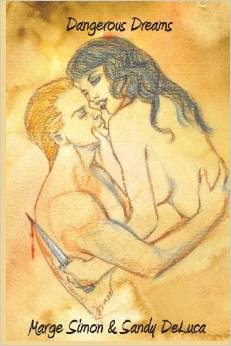
Family Ties
She misses them, misses those sultry Saturday nights when they tied her to the bedpost & laughing, ran their blades against her throat.
She cries for them, though her face is scarred, her mouth deformed, & her left thumb is history.
She hears her brothers’ voices, excited about a new pair of pliers, her parents’ laugh at her door. Their labors on her last a long time, and they retire to rest early.
Sleep won’t come, this night. She tears her tethers from the wall, seething with anger, her wounds beyond description, mind on revenge, and in the shed, she finds the tools.
She buries them upstate their skulls by the lake, hands & feet in a farmer’s barn, tosses their torsos into a culvert shaded by towering oaks.
Maybe they’ll come back, tramping through thickets, across rambling farmlands, when the red moon rises.
Maybe she’ll be waiting, hugging her legs under the stars some sultry Saturday night, anxious for the special comfort of their implacable attention.
Marge Simon & Sandy DeLuca
margesimon.com www.sandydeluca.com
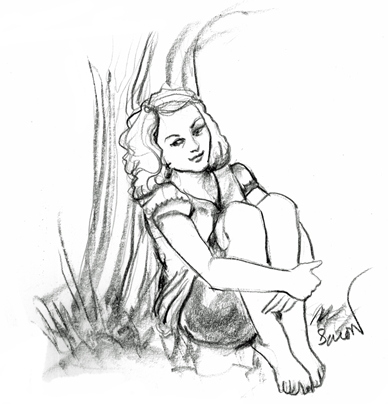
From the collection The Sex Lives of Monsters, Helen Marshall selected “The Collected Postcards of Billy the Kid”
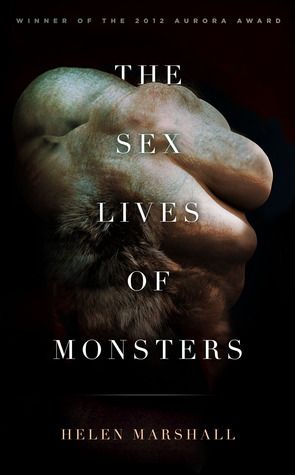
From Helen: “I wrote this poem–one of my very favorites from the collection–on a series of postcards I purchased on a road trip across Arizona with my family. Billy the Kid has always intrigued me, particularly after I read Michael Ondaatje’s stunning The Collected Works of Billy the Kid to which this is a definite homage. Vibrant, lonely, possessing such an immense capacity for violence, my version of Billy is a man haunted by himself, but also in love with himself, a ghost searching out his own imminent death.”
The Collected Postcards of Billy the Kid 2013
1. These are the lost years— it was easy for Billy to lose himself in them, tucked away from time where the earth heaved like a lung, hills breaking to gravel the rocks, shattering pines and blasting aspen.
It was the first time Billy saw snow and so he sank himself into it, supine, arms spread and the sun superheating his chest until he sat up again saw the angel trace of himself.
The desert never held his presence so long.
2. His path curved like a whip across the wasteland. He kept Garrett’s man behind him, losing him sometimes but waiting patient-like until he saw the black silhouette pinched like dough in the distance.
When he was lonely, he imagined walking into that other’s camp sharing whisky, bread, bacon, letting that other clean his gun, tick tick (but companionable!) before one of them blew the other apart.
This half-dream was the end of his loneliness— that and the blank of the shadow ten miles away. He would have made a love letter of it if he could.
3. The earth was a scuttling black: glassy, black as an upset anthill.
But one evening as the sky sank into blue gloom, Billy saw the edge of a dead volcano light up red as the tip of his cigarillo.
“Oh,” said Billy, and it was the first time he had spoken in many days.
It pleased him that when his principles cracked it was for the beauty: that bright, burning thing, the end of all.
4. By then Billy’s beard had begun to grow in, and when he caught sight of himself he was angry.
He had been called “the Kid” for so long he was afraid to leave the name behind.
After that he began to shave— he had never done anything religiously before but that was how he did it,
cold edge running across the skin, catching the blood when he slipped.
He refused to leave any piece of himself behind.
5. Sometimes they called him Billy, sometimes a son of a whore sometimes the Devil.
(It was only this last he protested.)
But one night he met a man named Barringer who told him of the crater that hid metal from the sky.
“They’s all want gold,” the engineer was reported to have said, before spitting.
Billy went to see, and when he climbed to the bottom, Barringer smiled.
“It’s somethin’,” he said, “what heaven throws down for us.”
Billy imagined these things— Lucifer’s joyless tumble, the shape of a body thrown down so hard, and the bright bang of the earth lighting up like a firecracker
(and sometime afterwards with his father’s gift for clairvoyance)
the click of the bullet and him mumbling, “¿Quién es? ¿Quién es?” three years down that hard road when Garrett (that damned angel of mercy) would lay him low.
Helen Marshall
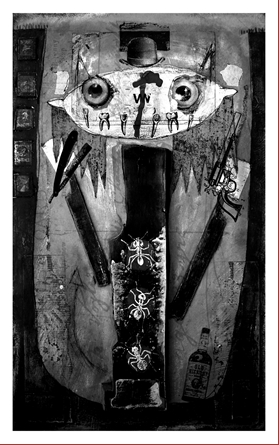
From the collection Four Elements, Linda Addison selected “Finding the Great Dream of Hell”
From Linda: “I approached (Marge, Rain and Charlee) with the idea of writing the book and was delighted they said yes and turned in fantastic work. Rain was a main player in our getting our publisher.
In any case, I’m torn between the following two (“Finding the Great Dream of Hell & “Indigenous Evolution”)…although I love them all and see them as a story told from beginning to end, using the Bardo concepts as a framework.
I fell in love with one of the Tibetan meanings of Bardo as “in-between state” when I decided my section would take the reader on a journey through space, time and dimensions after their physical form suddenly changes. I used poetic license to create my own Six Bardo (Continuum, Observation, Transcendence, Death, Revelation, Transmigration) after studying some traditional translations.
One definition of Bardo One=Shinay bardo (Tibetan): is the first bardo of birth and life. This Bardo commences from conception until the last breath, when the mindstream withdraws from the body.”
Finding the Great Dream of Hell 2013
Traveling without moving scenery speeds by full of fire, trees, cows, wood, brick darken and crumble.
The Underworld sings from earth that will no longer embrace me, abandoned by gravity exhaling nothing I still remember soft tissue.
Relentless flames boil water from earth entering me, wanting to cry, scream, moan I can only bend accept, persist in the rumbling agony.
Is this a dream, am I in hell?
Linda D. Addison, Marge Simon, Rain Graves and Charlee Jacob
http://www.cith.org/linda/ http://margesimon.com http://raingraves.blogspot.com
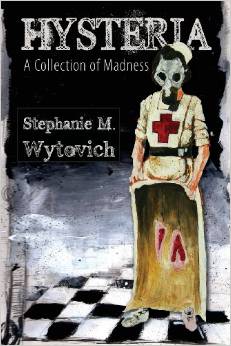
From the collection Hysteria: A Collection of Madness, Stephanie Wytovich selected “Nurse In Ward #1”
From Stephanie: “’Nurse in Ward #1’ embodies the tragic reality of life in the asylum as it portrays madness beyond the patients, beyond the sick and confused. Insanity is a concept, a disease that lurks behind every corner in my madhouse, and sometimes it’s found in the places, and in the people, who you’d least expect.”
Nurse In Ward #1 2013
I like it when it rains Because the air Has a reason to feel cold, And I’m not constantly Reminded that there are People around me Moments from death, Practically knocking down The Reaper’s door To escape
I like it when it pours Because the sound Drowns out their screams, Helps with the voices In their heads, And I can sit back, Read on my lunch break Without the moans of Hungry spirits Creeping through the Cracks in my floor
I like it when it storms Because the lights go out And I can pretend I don’t See them fighting, Don’t hear them begging As the crazies break out Of their rooms and murder Their neighbors while they sleep I pretend I’m not there, Because when it showers I go off duty and Let the asylum drown
Stephanie Wytovich
http://stephaniewytovich.blogspot.com
☢
https://staging.horror.org/wp-content/uploads/2026/09/dark-roads-bruce-boston.jpg|https://staging.horror.org/wp-content/uploads/2026/09/marge-and-sandy-danerous-dreams.jpg|https://staging.horror.org/wp-content/uploads/2026/09/billythekid.jpg|https://staging.horror.org/wp-content/uploads/2026/09/stephanie.jpgdark-roads-bruce-boston.jpg|marge-and-sandy-danerous-dreams.jpg|billythekid.jpg|stephanie.jpg